The Challenge
Recruiting is one of the hardest problems any small business faces. It is time consuming, high stakes, and difficult to get right. A one-page resume and a short interview rarely give you a complete picture of whether someone will be a good fit for your team, and the cost of a bad hire can set a small organization back significantly.
A Tri-Valley insurance agency was preparing to staff a couple of new positions and wanted to find a better way. Like most small businesses, they did not have a dedicated HR department or an expensive applicant tracking system. The owner was doing everything himself, spending hours reviewing resumes and trying to figure out which candidates were worth bringing in for an interview.
He knew there had to be a smarter approach.
What We Built
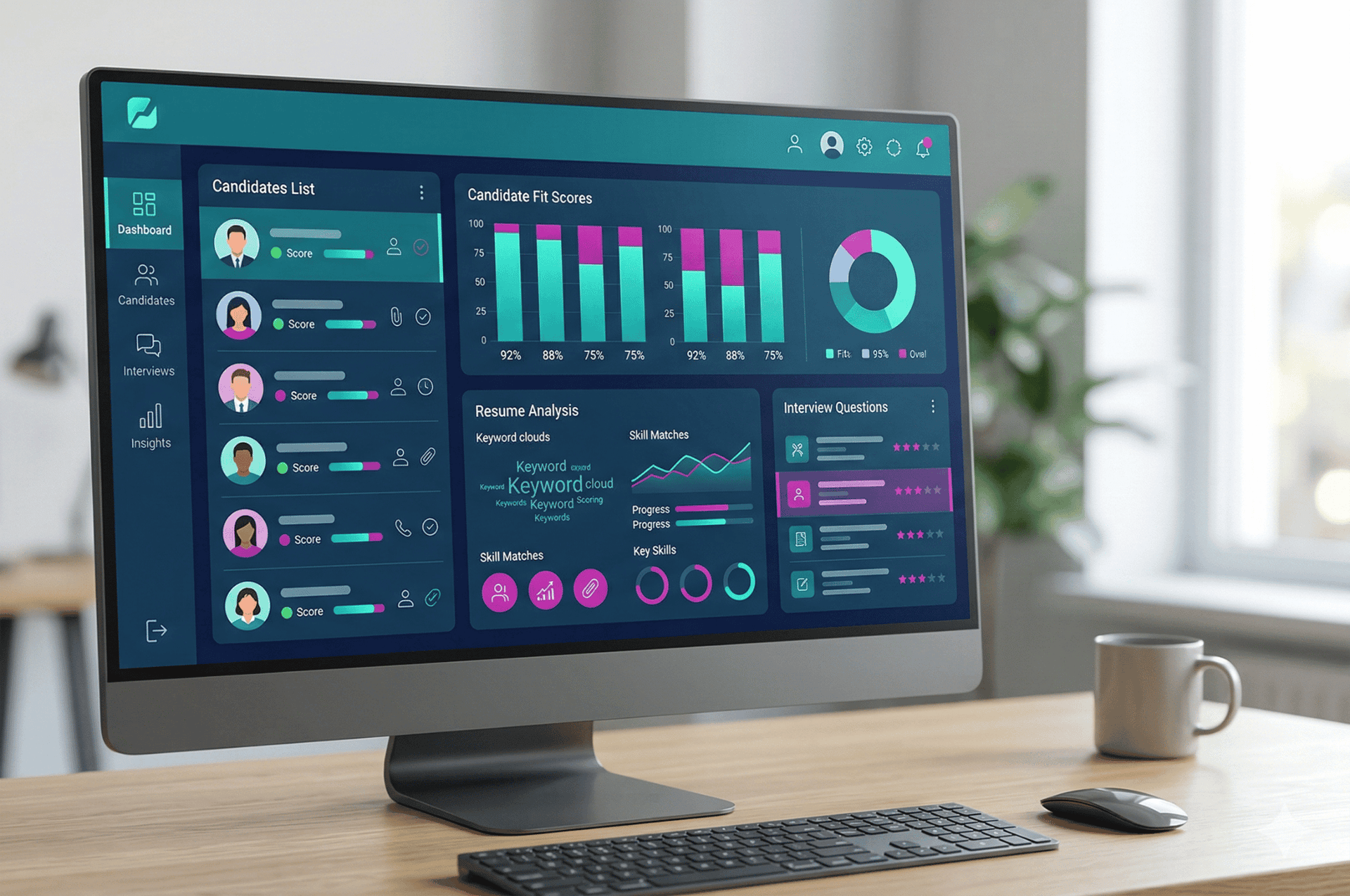
We designed an AI-powered candidate screening system that automates the entire evaluation process from resume intake to interview preparation. The system works in three stages, each building on the last.
Stage 1: Research and Verification
The system takes a resume and a job description as inputs. It then performs a web search using publicly available sources to cross-reference the information on the resume. It looks for consistency, validates claims where possible, and flags anything that warrants a closer look. The result is a research dossier that gives the hiring manager a much fuller picture of each candidate than a resume alone could ever provide.
Stage 2: Candidate Fit Scoring
Using a framework based on the methodology in Steve Suggs' "Can They Sell" book, the system scores each candidate across five key dimensions. This is not a simple keyword match. The AI evaluates the full context of the candidate's background, experience, and research findings to produce a structured fit assessment. Each dimension gets a score and a clear explanation of the reasoning behind it.
Stage 3: Personalized Interview Questions
This is where the system really shines. Instead of generic "tell me about a time when" questions, the AI generates interview questions that are tailored to each specific candidate. The questions combine details from that person's background with the Suggs framework dimensions, so every question has a clear purpose.
Each question comes with an explanation of why it is relevant and what a strong or weak answer might look like. The interviewer walks into the room prepared with targeted, insightful questions instead of the same recycled list that every other company uses.
The Results
The entire process is fully automated and designed to be run by the office manager. The agency owner no longer has to spend his evenings reviewing resumes. Instead, he receives a curated stack of candidates, each with a fit score, a research summary, and a personalized set of interview questions ready to go.
What used to take hours of manual review now takes minutes. The system handles the heavy lifting, and the humans focus on the part that matters most: the actual conversation with the candidate.
More importantly, this small locally owned agency now has a systematic and scalable hiring process that can compete with any Fortune 500 company. They have the same rigor, the same structure, and the same data-driven approach that large enterprises use, without the large enterprise price tag.
"We went from gut feelings and generic interview questions to a structured, data-driven process overnight. It is like having a recruiting department without having to hire one."
Why It Worked
This project worked because we did not try to replace human judgment. We built a system that gives the humans better information to work with. The AI handles the research, the scoring, and the question generation. The agency owner and his team make the final decisions, but now they make those decisions with a much clearer picture of each candidate.
The system also scales naturally. Whether the agency needs to fill one position or ten, the process stays the same. Every candidate gets the same thorough evaluation, and every interviewer gets the same quality of preparation.